The MaxLength attribute specifies the maximum length of data value allowed for a property which in turn sets the size of a corresponding column in the database. It can be applied to the string or byte[] properties of an entity.
using System.ComponentModel.DataAnnotations;

public class Student
{
    public int StudentID { get; set; }
    [MaxLength(50)]
    public string StudentName { get; set; }

}
In the above example, the
MaxLength(50) attribute is applied on the StudentName property which specifies that the value of StudentName property cannot be more than 50 characters long. This will create a StudentName column with nvarchar(50) size in the SQL Server database, as shown below.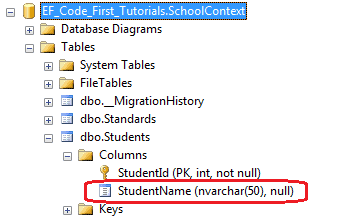
Entity Framework also validates the value of a property for the
MaxLength attribute if you set a value higher than the specified size. For example, if you set more than 50 characters long string value, then EF 6 will throw System.Data.Entity.Validation.DbEntityValidationException and EF Core will throw Microsoft.EntityFrameworkCore.DbUpdateException.
Note: The MaxLength attribute can also be used in ASP.NET MVC to validate the value of a property.


0 comments:
Post a Comment
Note: only a member of this blog may post a comment.